
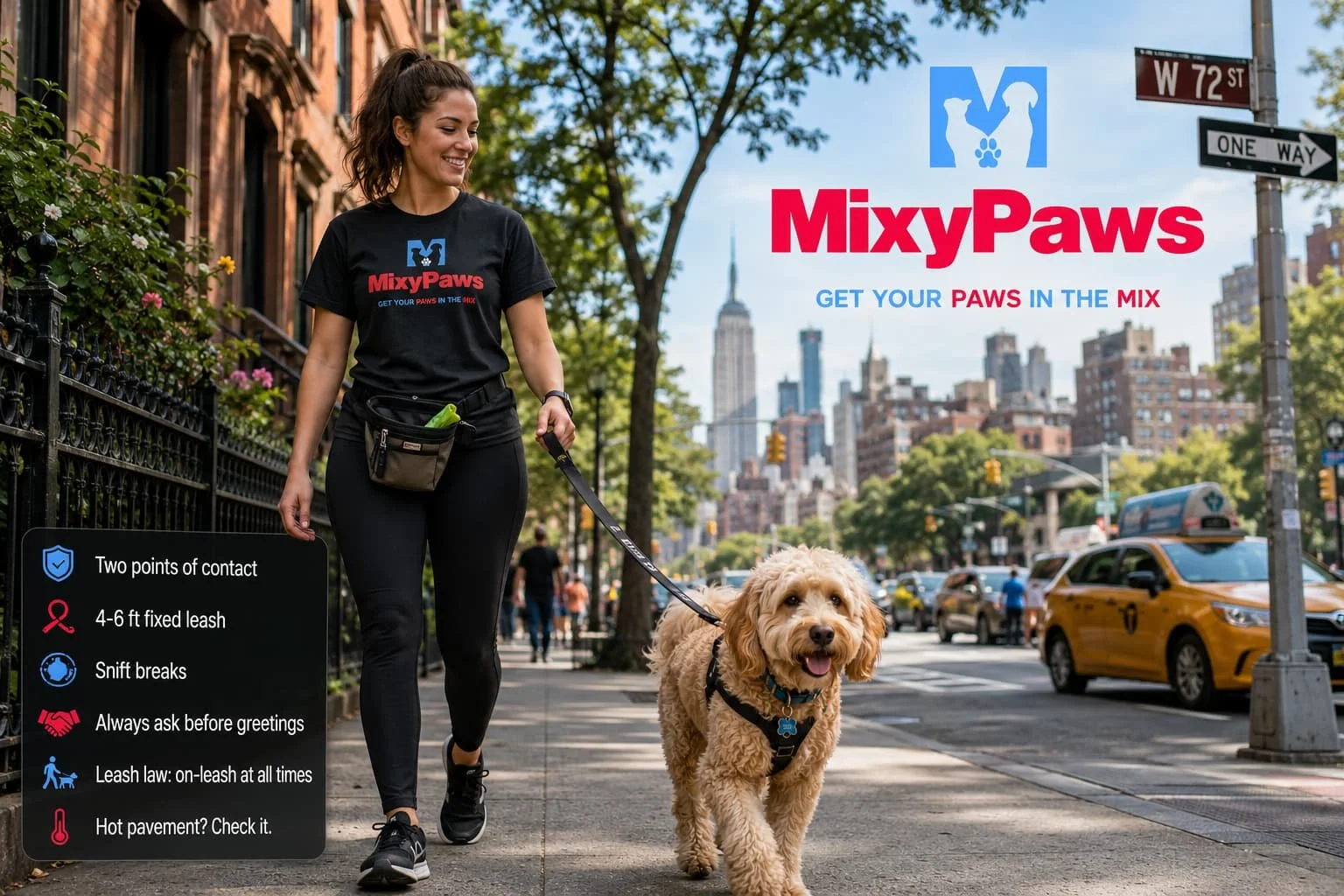
Walking a dog in Manhattan requires a different skill set than walking a dog in a suburb with a yard and quiet cul-de-sacs. Dense sidewalks, tight corners, elevator lobbies, food wrappers on every block, and other dogs at every turn mean the city demands more from both the walker and the dog. These tips come from daily experience walking dogs across Manhattan's neighborhoods. Whether you walk your own dog or you're evaluating what a professional walker should know, here's what makes a difference. For more on what professional NYC walkers prioritize, check out MixyPaws' safety standards.
Key Takeaways
Use a 4 to 6 foot fixed leash. Retractable leashes are a hazard on city streets
Two points of contact (collar plus harness, dual-clip leash) is the NYC standard for safety
Let your dog sniff. It's mentally stimulating
Never let your dog approach another dog without asking the other owner first
Know NYC's leash law: dogs must be on-leash at all times outside designated off-leash areas
Check the pavement temperature before a summer walk. Hot asphalt can burn paw pads
Build a consistent schedule. Dogs thrive on routine, and predictable walk times reduce anxiety
Know your dog's threshold: reactive dogs need more space, quieter routes, and a walker who reads the street ahead
Gear That Matters
The right equipment makes walks safer and more controlled. Here's what experienced NYC walkers use and what to avoid.
Leash: Use a Fixed 4 to 6 Foot Leash
Retractable leashes give you limited control on a busy sidewalk and create a trip hazard for pedestrians. A standard non-retractable leash keeps your dog close and gives you the ability to react quickly. When you're navigating a crowded corner in Midtown or a narrow sidewalk on the Upper West Side, you need that control. Professional NYC walkers rely on a fixed-length leash because it's safer for the dog, the walker, and everyone else sharing the sidewalk. For more on how MixyPaws prioritizes safety, visit our dog walking safety page.
Collar and Harness
Most professional NYC walkers use a properly fitted flat collar for ID tags plus a no-pull harness with both front and back clip options. For strong pullers or reactive dogs, a front-clip harness redirects momentum more humanely than a prong or choke collar. The harness should be snug but not tight. You should be able to fit two fingers under each strap.
The Two-Point-of-Contact Rule
Clip your leash to both the harness and the collar, or use a double-ended leash that connects to both. This is MixyPaws' standard protocol on every walk. If a clasp fails or a dog backs out of a harness, the second point of contact keeps them safe. Manhattan streets are unpredictable. This precaution can prevent a worst-case scenario.
What to Carry
Poop bags. Always more than you think you'll need
Water and a collapsible bowl for walks over 30 minutes or on warm days
High-value treats for reinforcing calm behavior around distractions
ID tag on collar with current contact info. Microchips matter but tags are faster
For additional safety guidance, the American Veterinary Medical Association's walking with your dog guidelines offer foundational advice that applies anywhere, including cities.
Before You Leave the Building
A good walk starts before you hit the sidewalk. How you prepare and how your dog exits the building sets the tone for what follows.
Calm Before the Leash Goes On
Don't clip the leash onto an excited, jumping dog. You're rewarding the chaos before the walk begins. Wait for a calm sit or standing still before attaching the leash. This matters in elevator buildings where your dog needs to be composed in a small, shared space.
Elevator and Lobby Protocol
In Manhattan high-rises, the lobby and elevator are the transition zones between your apartment and the street. Have your dog sit or stand calmly before entering. Keep the leash short in the elevator. Other residents and their dogs may be there. Don't let your dog greet strangers in the lobby unless invited. These close-quarters interactions can escalate if one or both dogs are uncomfortable.
Quick Pre-Walk Check
Collar and harness are properly fitted. No slipping room, but two fingers should fit under the strap
Leash is clipped securely. Give it a quick tug test before heading out
Tags are on the collar and legible
Poop bags in your pocket
On the Walk: Urban-Specific Tips
City streets require a different level of attention than a quiet park path. These tips address the challenges Manhattan walkers deal with daily.
Managing the Sidewalk
Walk with your dog at your side or slightly behind you, not out in front pulling. If your dog is on the traffic side of the sidewalk, switch so you're between them and the street. Keep enough lead to let them sniff but not so much that they're darting into foot traffic. On narrower sidewalks or during busy times, shorten the leash to keep your dog close.
The Sniff: Let Your Dog Read the Street
Sniffing isn't wasted time. It's a dog's primary way of understanding their environment and is mentally exhausting in a good way. Professional walkers build sniff stops into the walk intentionally. A dog that gets to sniff comes home calmer than one that was marched through the same blocks at a fast pace. In a city as dense and stimulating as Manhattan, letting your dog engage with their environment is one of the simplest ways to enrich their walk. To learn more about how professional walkers structure their time on the street, read our NYC dog walking primer.
Dog-to-Dog Encounters
Always ask before letting your dog approach another dog. Even a friendly dog can trigger a reaction from a dog that's having an off day. Keep greetings brief, watch body language, and be ready to move on. For reactive dogs, cross the street early. Don't wait until you're two feet away. In neighborhoods with high dog density like the Upper East Side or Chelsea, you'll be managing multiple encounters per block. Staying proactive is the best strategy.
NYC-Specific Hazards
Hot pavement in summer. Test with the back of your hand. If it's too hot for you, it's too hot for paws
Food on the ground. NYC sidewalks are a constant scavenger hunt for dogs. Watch for chicken bones, wrappers, and other dropped food
Grates, subway vents, and uneven pavement. Some dogs are sensitive to the sounds and textures underfoot
Construction sites. Loud sudden noises and unfamiliar equipment can startle reactive or anxious dogs
Other dogs on retractable leashes. Be extra alert. You can't predict their reach or behavior
If you're planning to take advantage of off-leash hours in city parks, make sure you know the rules. The NYC Parks Department's off-leash area guidelines outline where and when dogs can be off-leash legally.
Building a Routine Your Dog Can Count On
Consistency is one of the most underrated parts of good dog walking. Dogs are creatures of habit. A predictable walk schedule reduces anxiety, supports housetraining, and makes the walk itself easier over time.
Same Times, Same Routes (at First)
When establishing a new walk routine, start with consistent timing and familiar routes. Whether you're walking your own dog or introducing a professional walker. Once your dog is settled and confident, varying routes adds mental stimulation without disrupting the sense of security. In Manhattan, that might mean sticking to the same few blocks for the first week before branching out to different parks or side streets.
How Often Should Your Dog Be Walked
Most adult dogs need at least one 30-minute walk per day. High-energy breeds need more. Puppies need several short outings. Senior dogs benefit from shorter, more frequent walks. According to the American Kennel Club, exercise needs vary by breed, age, and health status. In a city environment where dogs don't have backyards to roam, daily walks are essential for physical health and mental well-being.
When to Consider a Professional Walker
If your schedule means your dog is home alone for more than 4 to 6 hours regularly, a professional mid-day walk makes a difference in their physical and emotional health. MixyPaws offers both private walks and semi-private walks across Manhattan, with GPS tracking and photo updates so you know when and where your dog walked. To understand what to look for in a professional walker, read our guide on what to expect from a NYC dog walker.
Better Walks Start with the Right Habits
Good dog walking isn't complicated, but it is intentional. The right gear, a calm pre-walk routine, awareness on the street, and a consistent schedule add up to walks that are safer, calmer, and more enjoyable for your dog. In a city like Manhattan, those habits matter.
If you'd rather leave the daily walks to someone who does this professionally, MixyPaws offers private and semi-private dog walking across Manhattan with GPS tracking, photo updates, two-point-of-contact safety, and walkers who know your neighborhood. Check out our services and rates to see which option is right for your dog, or schedule a free meet and greet to get started.
